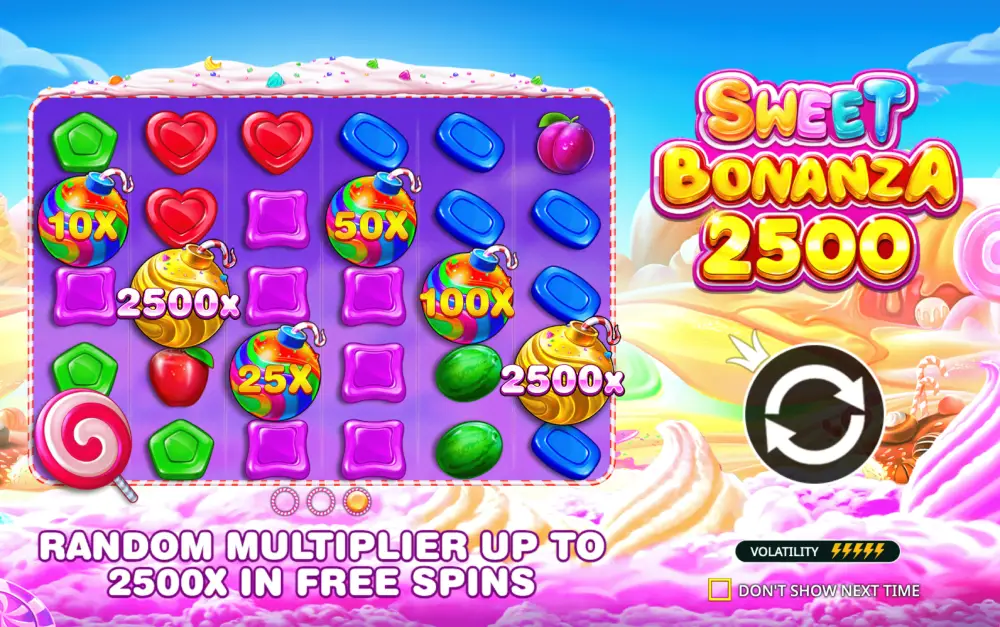
The bonus buy on Sweet Bonanza 2500 costs 100x stake and drops you straight into the free-spins round. The certified RTP on the buy is typically slightly higher than base game (around 96.6–96.8% on the 96.53% build), which sounds attractive until you do the math on variance.
The expected value question
At a €1 stake, one bonus buy costs €100. The free-spins round has a wide distribution: most outcomes return €30–€150, a meaningful slice returns €0–€30, and the tail goes to four or five figures. To smooth that distribution toward the theoretical RTP, you realistically need 30–50 buys. That's a €3,000–€5,000 commitment at €1 stakes.
Organic spins: slower, cheaper variance
Triggering 4 scatters organically happens roughly once every 200–300 spins on the base game (Ante Bet shortens that to ~120–180). At €1 per spin without Ante Bet, that's €200–€300 of expected spend per natural trigger - substantially cheaper than buying, with the same free-spins math once you're in.
When each option makes sense
- Bonus buy fits: short play windows, large enough bankroll to absorb 10+ buys, players who specifically want feature-only sessions.
- Organic spins fit: longer sessions, smaller bankrolls, players who enjoy base-game tumbles and don't want to gamble all balance into one feature.
For a deeper breakdown of the feature mechanics and trigger math, see the Sweet Bonanza 2500 bonus buy and free spins guide. If you're new to the grid layout itself, start with how to play Sweet Bonanza 2500 before committing real money to either path.
The honest answer: neither option has a meaningful edge over the other at fair RTP. Bonus buy compresses variance into fewer, larger swings. Organic spins spread variance over more rounds. Pick the one that matches your bankroll and your patience, not the one a streamer with a sponsored balance is using.